

What Is a Non-Native English Speaker? The Brain Benefits, Advantages, and Challenges of Speaking More Than One Language
A non-native English speaker is someone whose first language is not English and who has learned English as an additional
A non-native English speaker is someone whose first language is not English and who has learned English as an additional
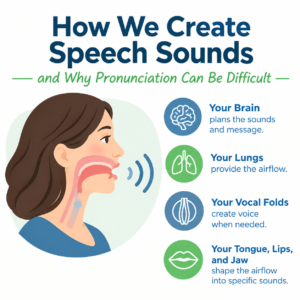
Speech sound production is a complex process involving the brain, breathing, vocal folds, tongue, lips, jaw, and other parts of the mouth. When pronunciation is difficult, the reason may be an articulation difficulty, a neurological speech disorder, or the influence of a person’s native language.
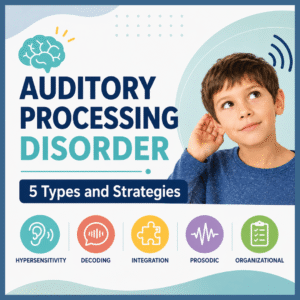
Auditory processing disorder (APD) is not just one condition. It can affect different listening skills and look very different from

The English /th/ sound is one of the most challenging sounds to master. While many young children need time to
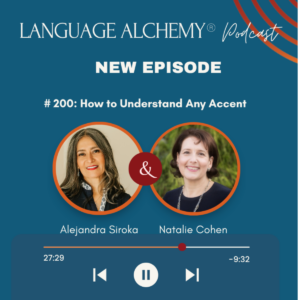
I recently had the pleasure of joining Alejandra Siroka on the Language Alchemy Podcast. We explored why unfamiliar accents can

Summer break is a wonderful time for children to relax, play, and recharge. Summer speech and language activities can help
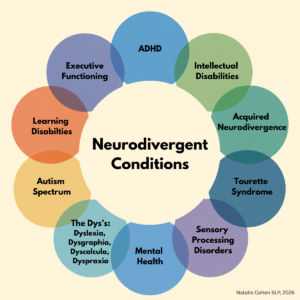
Neurodivergence refers to differences in how the brain processes information, communicates, learns, focuses, socializes, and experiences the world. Neurodivergent conditions
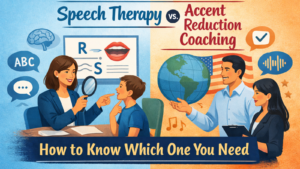
Speech Therapy vs Accent Reduction Coaching: Understanding the Key Differences If you’ve ever wondered about the difference between speech therapy

Accent reduction training is not about erasing who you are—it’s about enhancing how clearly and confidently you communicate while maintaining

Let’s talk about “Accent Bias”: Why accents shape perception—and why understanding must go deeper What Is an Accent? An accent
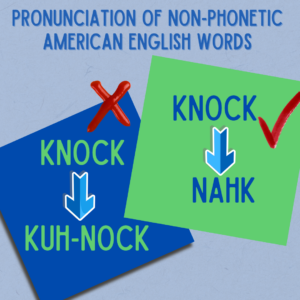
American English is not a phonetic language, which means many words are not pronounced the way they are spelled. For non-native speakers,

Understanding the Importance of Accent Reduction in Business Communication Clear communication is one of the most important skills in today’s