
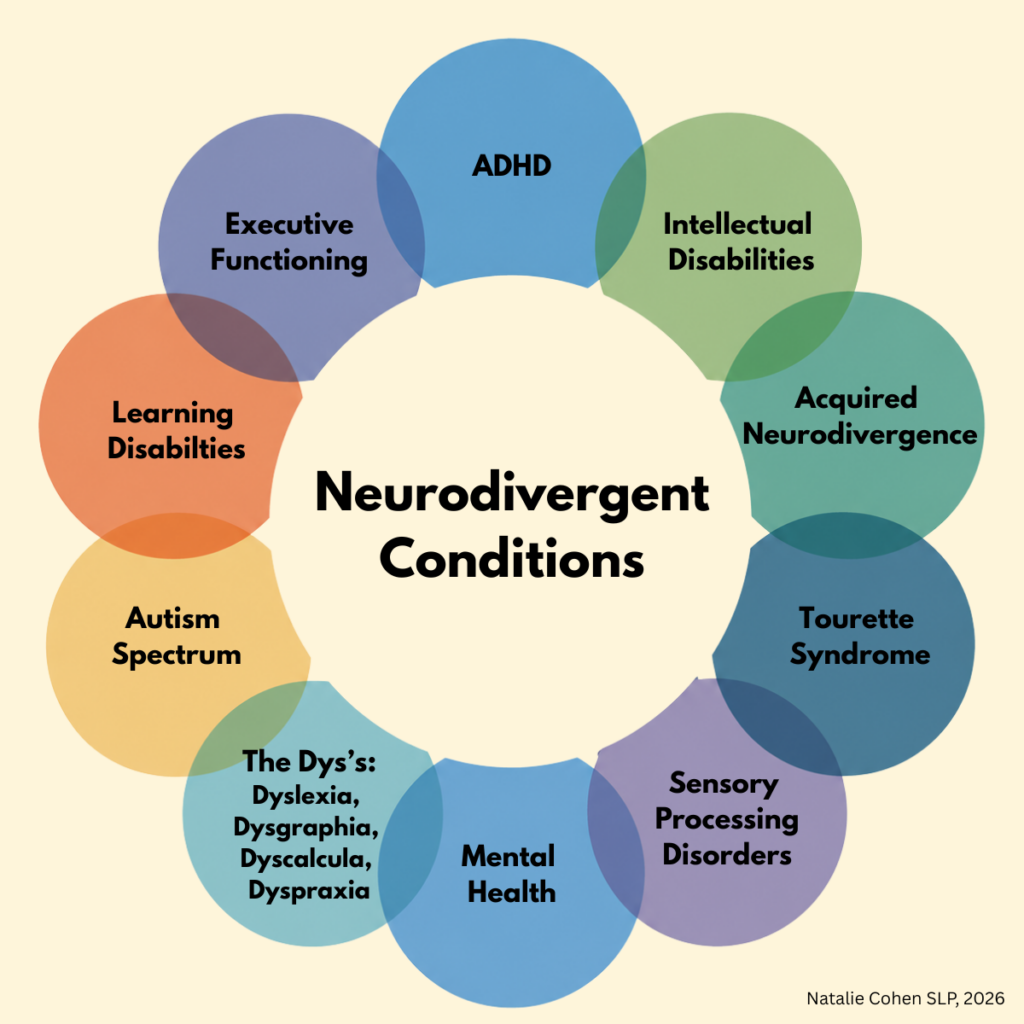
Neurodivergence refers to differences in how the brain processes information, communicates, learns, focuses, socializes, and experiences the world. Neurodivergent conditions are more common than many people realize, and understanding them can help individuals access support, improve self-awareness, and thrive both personally and professionally.
As a speech-language pathologist, I often work with children, teens, and adults who have spent years wondering why certain things feel harder for them than for others. In many cases, understanding neurodivergence provides clarity, validation, and a pathway toward effective support.
What Does Neurodivergent Mean?
The term neurodivergent describes individuals whose brains function differently from what is considered “neurotypical.” These differences are natural variations in human brain development and functioning.
Neurodivergence may include:
- Autism
- ADHD
- Executive Functioning Disorder
- Dyslexia
- Dysgraphia
- Dyscalculia
- Tourette syndrome
- OCD
- PTSD
- Learning disabilities
- Social communication difficulties
- Intellectual and developmental disabilities
- Certain mental health conditions
Every neurodivergent individual is unique. Two people with the same diagnosis may have very different strengths, challenges, and support needs.
For additional information on neurodiversity, visit the
Autistic Self Advocacy Network and
CHADD (Children and Adults with ADHD).
Common Signs of Neurodivergence
Neurodivergence can appear differently in children, teens, and adults. Some individuals are diagnosed early, while others are not identified until adulthood.
Communication Differences
Some individuals may:
- struggle with social communication
- misunderstand sarcasm or figurative language
- have difficulty reading social cues
- avoid eye contact
- struggle with conversational turn-taking
- prefer direct communication
You may also enjoy my article on Speech Therapy vs. Accent Reduction Coaching to better understand communication differences and support options.
Attention and Executive Functioning Difficulties
Executive functioning refers to the brain’s ability to:
- organize
- plan
- prioritize
- manage time
- regulate attention
- begin and complete tasks
Signs of executive functioning difficulties may include:
- chronic procrastination
- forgetfulness
- losing items frequently
- difficulty transitioning between tasks
- emotional overwhelm
- poor time management
Some individuals with ADHD or executive functioning disorder are highly intelligent but still struggle with organization and follow-through.
For more information about executive functioning, visit
Understood.org Executive Functioning Resources.
Sensory and Emotional Differences
Some neurodivergent individuals may be highly sensitive to:
- noise
- bright lights
- textures
- crowds
- strong smells
Others may experience:
- emotional intensity
- anxiety
- difficulty regulating emotions
- social exhaustion
- burnout after masking or “fitting in”
Many neurodivergent people also develop strong coping strategies that can make signs less obvious to others.
Strengths Associated with Neurodivergence
Neurodivergence is not simply a list of deficits. Many neurodivergent individuals have significant strengths, including:
- creativity
- innovation
- deep focus
- empathy
- attention to detail
- strong memory
- problem-solving abilities
- unique perspectives
Understanding both strengths and challenges is important for building confidence and finding appropriate support.
What Should You Do If You Are Concerned?
If you think you or a loved one may be neurodivergent, the first step is not panic — it is curiosity and education.
1. Observe Patterns
Notice whether difficulties are:
- consistent over time
- occurring across settings
- interfering with school, work, relationships, or daily life
2. Learn More
Reading about neurodivergence can help identify patterns that may have previously been misunderstood.
Helpful resources include:
3. Seek Professional Support
Depending on the concerns, support may come from:
- a speech-language pathologist
- psychologist
- psychiatrist
- occupational therapist
- developmental pediatrician
- counselor or therapist
A professional evaluation can help identify strengths, challenges, and appropriate recommendations.
4. Focus on Support, Not Labels
A diagnosis can be helpful, but the ultimate goal is understanding how to better support the individual.
Support might include:
- therapy
- coaching
- accommodations
- executive functioning strategies
- communication support
- school or workplace modifications
Neurodivergence in Adults
Many adults discover they are neurodivergent later in life, especially individuals who:
- were academically successful
- learned to “mask” difficulties
- were misunderstood as lazy, shy, emotional, or disorganized
- developed coping mechanisms that hid challenges
Receiving answers later in life can often bring relief, self-understanding, and access to better support systems.
Final Thoughts
Neurodivergence is not something that needs to be “fixed.” It is a different way of experiencing and interacting with the world. When individuals better understand how their brains work, they can build strategies, environments, and support systems that help them thrive academically, socially, emotionally, and professionally.
If you are concerned about yourself or a loved one, you do not have to navigate it alone. Early support and appropriate guidance can make a significant difference in confidence, communication, executive functioning, social interaction, and daily life skills.
As a speech-language pathologist, I work with children, teens, and adults who experience:
- social communication difficulties
- executive functioning challenges
- language processing differences
- selective mutism
- autism-related communication differences
- workplace and professional communication concerns
- accent and communication confidence challenges
Therapy and coaching can help individuals better understand their strengths, improve communication skills, develop practical strategies, and feel more confident navigating school, work, relationships, and everyday interactions.
You may also be interested in my related articles and services on:
- speech therapy
- social communication skills
- accent modification and professional communication coaching
If you would like to learn more about services or schedule a consultation, please visit:
Natalie Cohen Speech Language Pathology


